You want bigger tickets, cleaner jobs, and fewer callbacks. Let’s cut the fluff and show you exactly how to get in the trenchless game—gear, training, numbers, safety, and the first jobs to hunt.
What “Trenchless” Really Means (and Why It Wins)
Trenchless is also known as no-dig pipe rehab: fixing failed lines from the inside instead of ripping everything open. Less excavation, less risk, faster schedule, happier customers. That’s not marketing—it’s the backbone of the No-Dig movement and why municipalities and contractors keep shifting toward it. But, the no-dig name is a bit misleading, since most jobs will require at least one access point that will likely require some digging, just not those long trenches! (NASTT)
For homeowners and facility managers, trenchless is simple math: minimal surface disruption with long service life. The U.S. EPA’s retrospective evaluation cites cured-in-place pipe (CIPP) with an effective service life of around 50 years when properly designed and installed. (EPA NEPIS)
The market isn’t shrinking either. Analysts peg global trenchless rehab at $4.6B+ in 2024 with steady growth through 2032; North America remains the heavyweight. Translation: the opportunity is real if you execute. (Fortune Business Insights)
Quick Glossary (What Does Everything Mean?)
- CIPP (felt or fiberglass) – A resin-saturated liner inverted or pulled into a host pipe and cured (steam, hot water, ambient, or UV). Durable and ideal for root intrusion, corrosion, and leaks. (EPA NEPIS)
- UV-CIPP – Uses UV light trains to cure liners fast with minimal heat, streamlining setup and reducing odor/emissions vs. traditional hot cures. (subsurface-inc.com)
- Spot Repairs (Patches or point repairs) – Short liner segments for localized defects—your easiest on-ramp.
- Pipe Bursting – Splits/replaces a brittle line by pulling a new pipe through; great for upsizing.
- Robotic Cutting – Post-lining reinstatement, obstruction removal; essential for clean finishes.
The Real Startup Costs (and How to Not Drown)
Let’s address the wallet. You can start lean or full-send. Typical startup ranges for basic trenchless (inspection + patching + entry-level lining) land roughly in the tens of thousands up to low six figures. Build out to full CIPP systems and robotic cutters and you’ll be in the $80,000–$250,000+ range depending on scope, brand, and whether you buy new or used. Make a plan; don’t wing it.
Spend smart in this order:
- Inspection & locating – A solid push camera, locator, and reporting workflow. You can’t fix what you can’t see.
- Point repair kit – A reliable patch system for fast, profitable single-defect fixes. Ask us how some companies are making huge sales just from adding trenchless spot repairs!
- Lining system + accessories – Start with smaller diameters and build out.
- Robotic cutter – Boosts speed, safety, and precision for reinstatements and prep. While we’re big proponents of robotic cutters, this could be a purchase for late, once profits help pay it. And if you start with point repairs, you don’t need to worry about a cutter immediately.
- UV upgrade – When your volume and job mix justify speed, quality control, and lower site impact from UV curing.
Financing tip: Equipment financing can smooth the cash curve so profit pays the note—not the other way around. Let your equipment work for you while you pay it off. The rest is profit.
Training & Credentials: Don’t Skip This
Two fast tracks shorten your learning curve:
- NASSCO PACP/LACP/MACP – The industry standard for condition assessment and coding. These creds raise your credibility with cities, engineers, and savvy property managers. PACP for mains, LACP for laterals, MACP for manholes. Hint: If you’re concentrating on trenchless pipe lining, concentrate on the training that will serve you and your customers the most – Get trained in the services you’ll be offering – Trenchless Boss can help!
- Trenchless resources – Conferences, trade shows, papers, and courses focused on selecting and executing trenchless methods correctly. You’ll meet vendors, compare tech, and avoid rookie mistakes.
- Trenchless Boss In-House and On-Site Training & Certification – We’re actual lining pros who have run plumbing companies for years. We know what works and we train you for real world scenarios. Plus, we offer full support and equipment service!
Trenchless jobs reward the crew that respects the process: resin handling, cure profiles, temperature/pressure control, and post-install verification. That’s profit protection.
Safety: Non-Negotiable
If you’re working in and around confined spaces. OSHA’s 29 CFR 1926 Subpart AA applies, period: hazard evaluation, monitoring, ventilation, rescue planning—do it by the book. (eCFR)
If you use styrenated resins (common in felt CIPP, but not something we recommend), follow current best practices: ventilation/exhaust management, exclusion zones, and stack height to disperse odors and minimize exposure. *Trenchless Boss does not sell styrenated resins. All of our resins are styrene free.
UV-CIPP can reduce heat, steam, and associated emissions/odors compared to traditional hot cures—which is one reason many contractors adopt it in sensitive settings. It’s not a free pass on safety, but it’s a real advantage.
Your First 90 Days: A Simple, Aggressive Plan
Week 1–2: Define Your Strike Zone
- Service menu v1: camera inspections, point repairs (2″–6″), small-diameter lining.
- Industries: high-yield segments like property managers, restaurants, medical/dental, HOAs, and older residential neighborhoods.
- Territory: stay tight for speed. Own a radius you can reach in 45 minutes. Mobilization costs can eat through your profits!
Week 3–4: Gear Up & Get Trained
- Lock in inspection kit + patch system. Schedule product training (call Trenchless Boss). Build your SOPs for prep, install, cure, QA/QC, and customer handoff with photos and videos. Really get your systems in place.
Week 5–6: Pilot Jobs (Paid—Not Free)
- Target small, clean wins—root intrusions, offset joints, single cracks.
- Shoot clean before/after video. Deliver a one-page “rehab report” for every job.
- Track time on tools, resin usage, and cure success. Your cure log is your warranty backbone and the key to accurate pricing.
Week 7–8: Tighten the Machine
- Standardize quotes and bundles (diagnostic + patch; inspection + spot-liner).
- Build a “No-Dig First” playbook: when trenchless wins, when it doesn’t, and how to explain it in one minute.
- Add a simple maintenance upsell: annual camera check or root management plan.
Week 9–12: Scale What Works
- Add small-diameter lining to your top 3 use cases. If volume and job mix justify it, plan your robotic cutter or UV curing upgrade (Trenchless Boss can help!).
Pricing, Margins & ROI (Practical, Not Hype)
Every market is different, but trenchless jobs typically compress worker schedule and surface restoration—the two big cost hogs in open-cut work. That creates room for premium pricing and better net margins when the process is tight. The EPA’s long-life expectation for CIPP supports premium value (longer life = less lifecycle cost for the client), and growing market demand backs sustained pricing.
Use a simple rule for early quoting:
- Baseline: Time-and-materials + resin/consumables + mobilization + risk factor (site constraints, access, depth, bends).
- Value proof: lead with disruption avoided (no slab demo, no landscaping redo), speed, and service life. Document everything with video and a one-page warranty.
- Audit your close competitors. Do a quick eval of the basic costs your nearby colleagues are charging. You don’t want to be drastically higher than those around you.
Marketing That Actually Converts (Leads that Turn into Customers)
Positioning: A promise of precision, speed, and respect for property.
Website essentials:
- A Trenchless Hub page with job types (roots, offsets, collapsed clay), pipe sizes, materials (cast, clay, Orangeburg, PVC), and turnaround times.
- Before/after videos (30–60 sec). Put them top-of-page and on every service page.
- A basic explainer of CIPP vs. open-cut with a simple cost/time comparison. (Back it with EPA service-life context and market growth to show you’re not guessing.)
SEO basics that matter:
- Build location pages for your top suburbs/cities. This is a big help when customers are searching for “near me” plumbing help.
- Stack intent keywords: sewer lining, CIPP, no-dig sewer repair, sewer pipe patch, trenchless pipe repair near me.
- Publish a “Trenchless Job Library”—each post: problem, findings (with PACP/LACP codes), method, result, and a 30-sec reel. (That’s SEO + proof + sales collateral in one.)
Outbound hits fast:
- Email every property manager and facility lead you already know: “30-minute no-dig assessment, video included.”
- Walk and talk: hand a one-pager to restaurant GMs, strip-mall owners, and HOA boards.
- LinkedIn: post one job case per week; connect with local GC supers and municipal engineers. Don’t sleep on LinkedIn. It’s a great way to build your network and follow other companies that can inspire your services.
- Google Business Profile: photos, videos, and weekly updates. Ask for reviews with the before/after video link. This is a must if you want to start appearing on Maps!
Your Core SOPs (Steal This Outline)
- Intake & Triage – Symptoms, building age/materials, prior repairs, access, water control plan.
- Camera & Locate – Full run, lateral branches, measure defects, PACP/LACP codes.
- Method Match – Patch vs. full-length liner vs. burst vs. dig-and-fix.
- Work Zone & Safety – Confined space, ventilation/exhaust, exclusion zones, cure method plan.
- Prep – Cleaning, descaling, reinstatement planning, bypass if needed.
- Install & Cure – Log temps/pressures, verify ends, follow manufacturer spec.
- QA/QC – Post-line video, measurements, coupons (if required), warranty doc.
- Closeout – Report with codes, video links, maintenance recommendations.
When to Choose UV-CIPP (And When Not To)
Choose UV when you need predictable cures, tight job windows, minimal odor complaints, and consistent QA in sensitive sites (medical, schools, high-rise). UV trains deliver fast, uniform cures without steam/hot-water logistics.
Stick with thermal or ambient for certain host pipe geometries, long runs, and some wet-out logistics already in place, or when your mix is mostly straightforward residential where your current thermal SOP is humming. (Plenty of profitable contractors run ambient for years—upgrade when your backlog and job types demand it.)
Pitfalls That Eat Profit (Avoid These)
- Skipping assessment standards – If you’re not coding, you’ll mis-scope work and invite disputes.
- “We’ll figure out safety onsite.” – Confined spaces and materials handling aren’t casual. Plan, monitor, document.
- Under-documenting – No cure logs, no video, no warranty clarity = margin killers.
- Buying gear before defining services – Inventory should match your first 20 jobs, not your five-year wish list. Want to talk about your goals and the smart equipment to invest in? Give us a call at 855-389-BOSS.
- Chasing everything – Own 2–3 repeatable use cases first, then expand.
Why Trenchless Now?
- Demand is rising and won’t slow: aging infrastructure, limited dig permissions, and owners who won’t tolerate disruption. (Fortune Business Insights)
- Service life is there when done right—decades, not years.
- UV tech is maturing, bringing speed and control that crews love and customers notice.
Trenchless rewards disciplined operators. If you like process, precision, and pride in clean finishes, you’ll thrive here.
Ready to Start? Here’s Your 7-Step Launch Checklist
- Pick your starter stack: inspections + patches + small-diameter lining. Schedule a no-pressure consultation with us – we’re here for you.
- Book product training dates.
- Write 10 SOPs (intake → closeout).
- Finance the gear so jobs pay the note. We can walk you through the numbers and connect you with some great financing options.
- Build the Trenchless Hub page on your website and publish your first Job Library case.
- Run 5 pilot jobs with rigorous documentation and video proof.
- De-brief, tighten, and decide when to add robotic cutting and/or UV.
Talk to Trenchless Boss
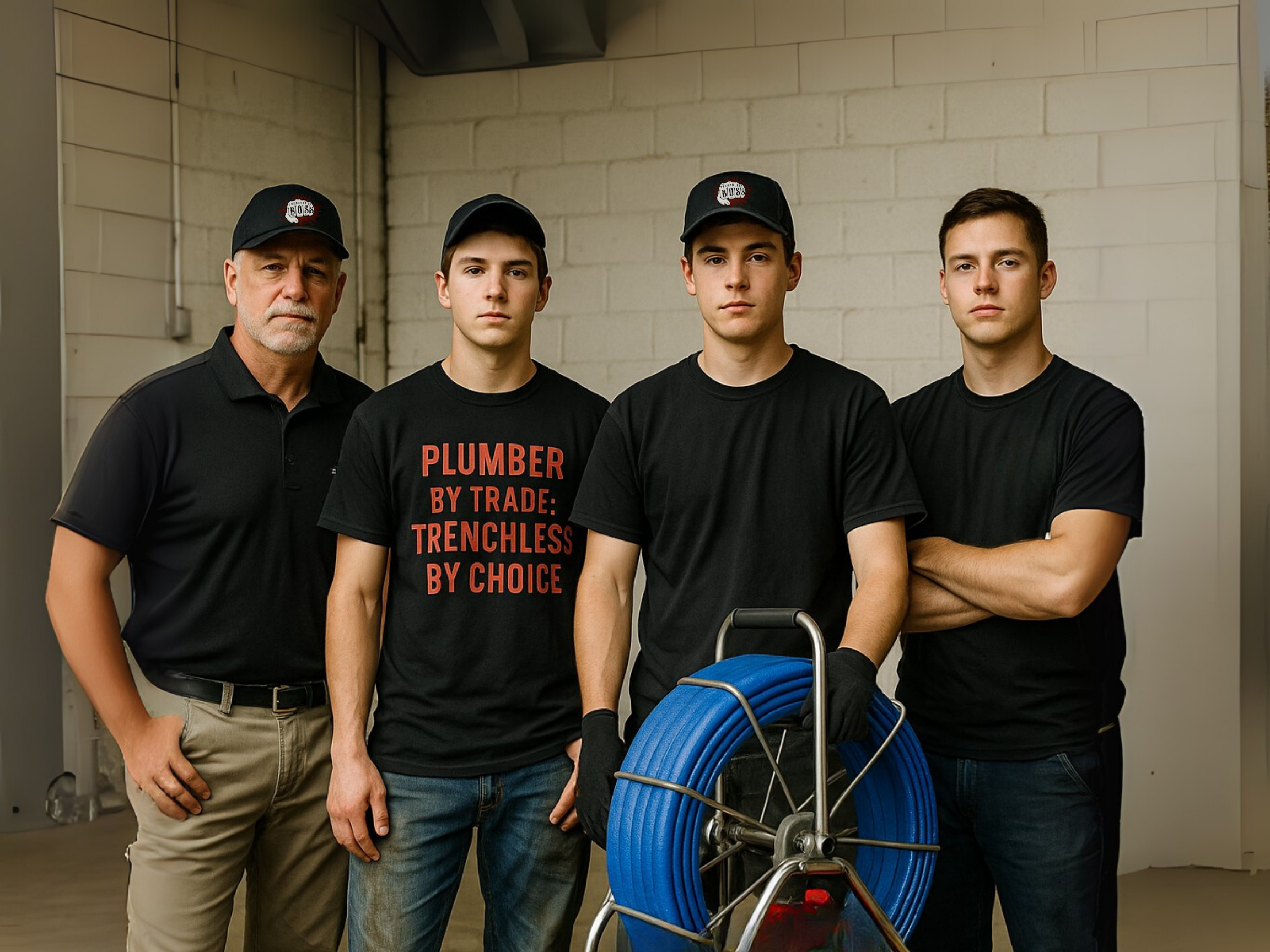
We’re plumbers by trade; trenchless by choice. If you want an honest roadmap—equipment, materials, training, and how to build trenchless into a profit center—bring your questions and your calendar. We’ll give you a plan that fits your crew, your market, and your goals.
Sources
- NASTT – No-Dig/Trenchless overview. (NASTT)
- NASSCO – PACP/LACP/MACP and styrene safety guidance. (NASSCO)
- OSHA – Confined Spaces in Construction (29 CFR 1926 Subpart AA) and FAQ. (eCFR)
- U.S. EPA – CIPP service-life context. (EPA NEPIS)
- Market outlook – Trenchless rehab growth and North America share. (Fortune Business Insights)
Bottom line: If you’re serious, start tight, train hard, document everything, and sell the value you actually deliver: speed, precision, and clean results. Most importantly, start with a provider that has your best interest in mind – trenchless done the Trenchless Boss way.